Alternate Words for "No"
November 9, 2026

The Word "No"

Your child reaches for something they KNOW they can’t have. You're frustrated, so you get up and firmly tell them “no.” Suddenly, your child bursts into a tantrum. Sound familiar? While there is nothing inherently wrong with using the word “no,” (as you and I both are told quite often in our adult life), some children on the spectrum may have a severe reaction to the word, leading some parents to look for alternatives.


Remain Realistic


If you‘re a parent looking for a way to reframe the way you tell your child “no,” here are a couple things to keep in mind.


  • It’s not wrong to not give your child everything they want when they want it. Unfortunately, for their safety and for others, the answer has to be no sometimes.
  • Try and understand the reason behind WHY your child is reaching for things they shouldn’t. Do they understand the implications? Are they seeking sensory input? Are they desiring attention? Do they seek increased autonomy? This can help you to know how to respond in an impactful way.
  • Regardless of how you reframe, your child may still have a negative reaction—and that’s okay. That doesn’t mean you failed.


Alternate Approaches


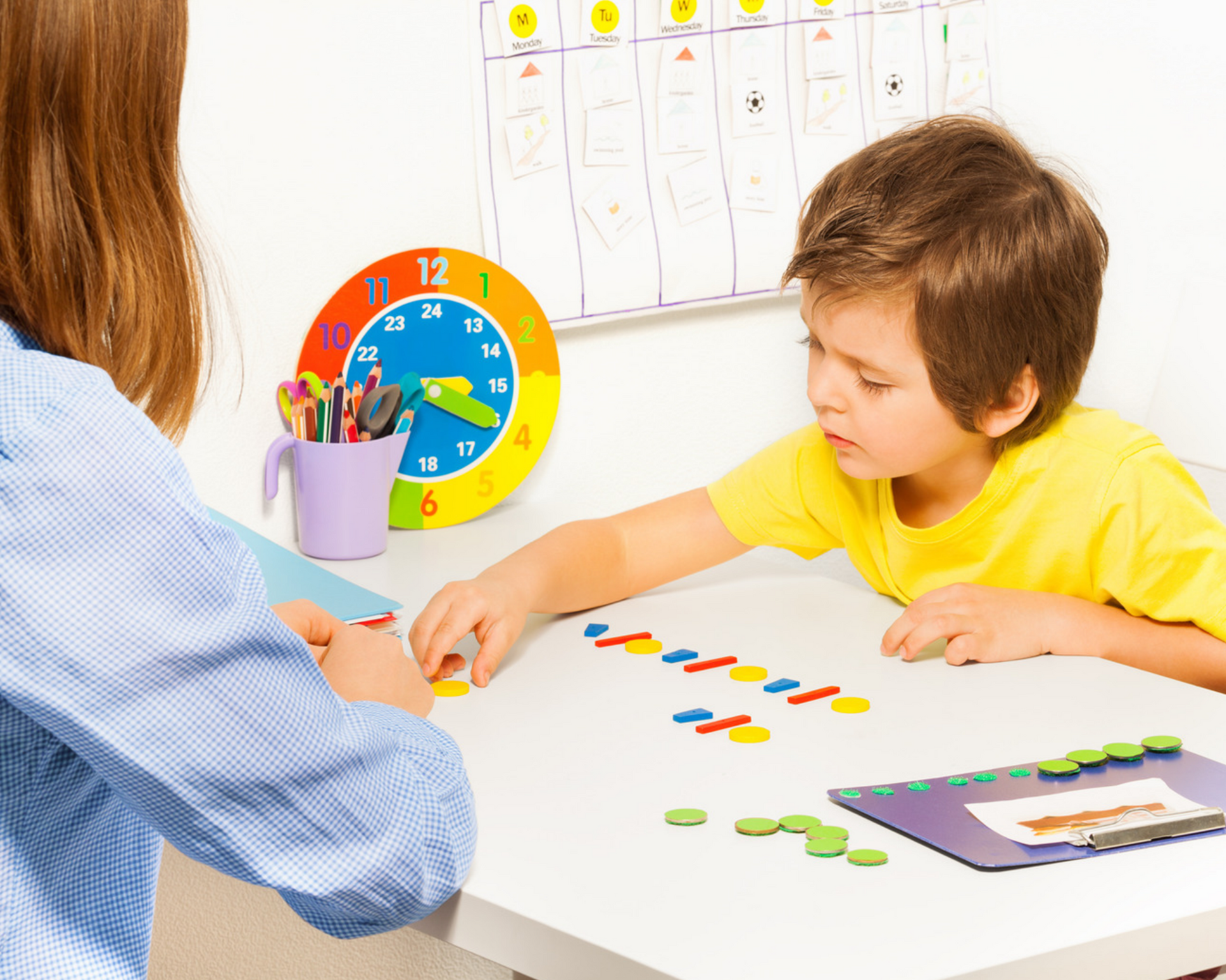
For some children, using the phrase “not available” can be more effective. It may often work best paired with immediately presenting two other options that ARE available. This may take multiple attempts to redirect. For it to be as effective as possible, remember to use options that are appealing to your child. Additionally, in instances where the answer is “not right now,” use visuals and simple language to show your child what they must do first in order to access what they want. For example, “first brush your teeth, then we’ll read a story.” Viusal timers and visual schedules can be used in addition to give the child a visual reminder of how much time is left until their preferred item or activity becomes available. Using other phrases instead of the word “no” can also avoid placing unnecessary attention on the unwanted behavior. Some children may seek out thigs the shouldn’t do because they are looking for a fun reaction. If you respond abruptly, strongly and immediately, that can unintentionally reinforce them to keep attempting. If you, however, have predictable expectations and reinforce other forms of attention towards your child, you can mitigate attention-seeking behaviors.

November 9, 2026
What is Interoception? Body: When your stomach rumbles and suddenly every food sounds delicious, you know you’re hungry. When you find yourself doing the potty dance, you know you need to pee. These little signs telling us what our body needs are called “interoception.” But what if those little signs we rely on were inconsisteny, or in some cases, completely absent? It would be a lot more difficult to care for yourself and even stabilize your mood. For a lot of individuals with autism, this is their every day struggle. Learning Body Cues Body: Now let’s expand on that scenario. Say that on top of your body cues being muddled, you have limited access to communication. This is something that many autistic children and their parents face day in and day out. What can help? Schedule When you cannot rely on a body cue to tell you when you need to eat, sleep or use the bathroom, a schedule might be in order. This can help train the body to know when it needs what, and in some cases it may even help develop those natural cues. Educate For some children, they may feel their body cues, but struggle to identify them. Using visuals and simple language to explain what sensations mean what can give your child autonomy and independence. Social stories can help to explain the scenarios around needs such as eating or using the bathroom in a context that may translate better to your child. Model This may be one of the hardest parts, but the best lesson is often the parent’s example. When you start to feel hungry, say out loud what you feel and what you’re going to do. When its bed time, narrate why you’re going to bed and how you know it’s time to sleep. you can even do the same thing with your household pet to make it more fun! Simplify  Often times half the battle is communicating WHAT we need. Once you find out what cues your child is most apt to miss or ignore, practice simple ways that a need can be requested for, and reinforce it avidly!
By Laugh And Learn Therapy • November 4, 2026
Discrete trial training in Brighton, MI breaks down complex skills into small, teachable steps using clear instructions and positive reinforcement for comprehensive learning.
By Laugh And Learn Therapy • October 4, 2026
Parent training and collaboration in Flint, MI equips caregivers with strategies to support therapy goals at home through regular updates, check-ins, and hands-on education.
September 29, 2026
Play based therapy (or Natural Environment Teaching) uses every day, relaxed play to create a therapeutic bond and teach skills.
September 29, 2026
When a child starts ABA for the first time, some parents and clinicians have noted the occurrence of a so-called “honeymoon” phase, where the child is extremely happy to be at the clinic and is picking up new skills with very little resistance
September 9, 2026
Real ABA is tailored to each child and works along with their personality. Therefore, if anything, it should actually foster the confidence and autonomy to allow their personality to flourish!
September 9, 2026
Whether you’re starting ABA therapy and looking to get a better understanding of the principles, or you’re trying to help your child with behavioral challenges at home, the ABCs of ABA is a great acronym to use!
By Laugh And Learn Therapy • September 4, 2026
Social skills training in Waterford, MI helps children understand social interactions, engage with peers, and develop communication skills through evidence-based group programs.
By Laugh And Learn Therapy • September 4, 2026
School readiness programs in Davison, MI prepare children for kindergarten by building foundational skills needed for academic success and classroom participation through ABA therapy.
By Laugh And Learn Therapy • September 4, 2026
Natural environment training in Howell, MI helps children generalize skills learned in structured sessions to everyday situations and real-world contexts through ABA therapy.